Python - Day9 - 初识&变量&条件语句&基本数据类型&循环
前言
1.编程语言:
-低级语言
-高级语言
2.Python种类:
-JavaPython
-cPython *****
-pypy
-字节码 和 机器码
一、基础
1.第一句python
-后缀名可以是任意
-导入模块时,如果不是.py文件时会出错
-Python 文件名 .py
2.Python 执行方式:
- python 解释器 py文件路径
C:\python35\python.exe D:\1.py
-输入python 进入解释器 实时输入并获取到执行结果
C:\python35\python.exe
print ("Hello World!")
3.文件形:
# !/user/bin/env python
(Linus系统需要) : 声明所使用的python解释器
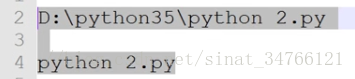
Windows & Linux :
4.编码:
-*- coding:utf8 -*-
python2 :编码为ASCII (出现中文,程序必须在头部)
python3:不需要
utf8:可识别中文,可解释,可执行
ASCII码:8位,最多256个 00000000 & 00000001
万国码(UNI Code ):至少16位 0000000000000000+ & 0000000000000001
utf-8 :能用多少表示 就用多少表示 00000001
补充:
字节,位
unicode utf8 gbk
utf8:3
gbk:2
5.执行一个操作:
用户登录程序:提醒用户输入用户名和密码
获取用户名和密码,检测:用户名=root 密码=root
正确:登录成功
失败:登录失败
a. input 永远等待,直到用户输入一个值,就会将输入的值赋值给一个东西:
input ('请输入用户名:') 将输入的值赋值给n,n指代用户输入的内容:
n1=input ('请输入用户名:')
n2=input ('请输入密码:')

print (n1,n2)
单行注释: #
多行注释: """ """
inp = input ('>>>')
>>> hello
inp="hello"
>>>10
inp="10"
#固若将字符串转换成数字
new_inp=int(inp)
inp*10=???
b.变量,代指某一个变化的值
n1="alex"
n2="root"
print(n1)
print(n2)
#C语言,底层将变量名去掉
print("alex")
print("root")
6.变量名
-字母
-数字(不能开头)
-下划线
-不能使用python关键字
-最好不要和python内置方法重复(pycharm写程序可以避免)
n111_bb12
u8)_asdf (X)
_998Ufasd
9ouf_asdf (X) 不能用数字开头
class (X) python关键字不能使用
sum()(python 内置的求和方法)
写照:
a12_b1="Love has no borders"
补充:变量名尽量有意义,一看变量名就知道代指什么
单词连接用: _ (user_id)
userId 用于java等语言
7.条件语句
代码块(缩进为4个空格,Tab键代指4个空格,一个代码块中缩进一致)
1).if 条件基本语句:
if 条件:
	内部代码块 #if条件成立,执行此代码块
	内部代码块
else:
	... #else条件成立,执行此代码块
print('...')
Ex:
if 条件:
    print('OK')
else:
    print('Error')
if 条件{
print('OK')
}else{
print('Error')
2).if 支持嵌套
if 1==1:
	if 2==2:
		print('SHINee’s back')
		print('SHINee’s back')
	else:
		print('SHINee World')
else:
	print('SHINee is best')
3).if--elif--else
inp=input('Who is the leader:')
if inp=='Onew':
	print('True')
elif inp==‘JongHyun’:
	print('JH is not the leader')
elif inp=='Key':
	print('Key is not the leader')
else:
	print('MH and TM are not the leader')

print('End')
4).补充
pass关键字
if 1==1:
	pass
else:
	print('Go')
8.基本数据类型
1).字符串
- 字符串(引号):引号内为字符(只有以下情况,不可混搭)
name="test"
name='test'
name="""test"""
name='''test'''
#pass关键字
if 1==1:
pass
else:
print('Go')
n1='SHINee'
n2='Is'
n3='Five'
n4=n1+n2+n3
n4=SHINeeIsFive
- 字符串的乘法:
n1='SHINee'
n2=n1*10
print(n2)
2).数字
age=24
Eg:
a1=10
a2=20
- 加法:a3=a1+a2
- 减法:a3=a2-a1
- 乘法:a3=a1*a2
- 除法:a3=a2/a1
-a3=4**4
-a3=39%8 #获取39除以8得到的余数(判断奇偶)
a=13
tamp=a%2
if tamp=0:
	print('偶数')
else:
	print('奇数')
补充:
a3=39//8 #取商
即:a3=4
9.循环
1).死循环
import time
while 1==1:
	print('True',time.time())
2).while循环(先执行判断条件,再执行代码块)
import time
count=0
while count<10:
	print('True',time.time())
	count=100
print(123)
import time
count=0
while count<10:
print(count,time.time())
count=count+1
print(123)
补充:
a).while--else
count=0
while count<10:
    print(count)
    count=count+1
else:
    print('else')  #只执行一次
print('..........')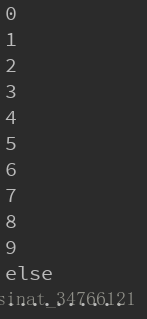
b).continue-break (遇到continue后,当前循环终止)
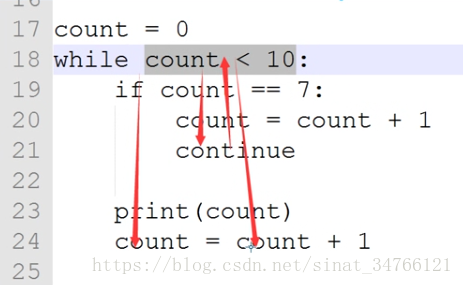
count=0
while count<10:
    if count==7:
        count=count+1
        continue
    print(count)
    count=count+1
print('..........')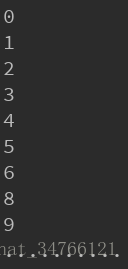
i).while --- continue (终止当前循环,开始下一次循环)
count=0
while count<10:
    count = count + 1
    print(count)
    continue
    print('111111111')
print('..........')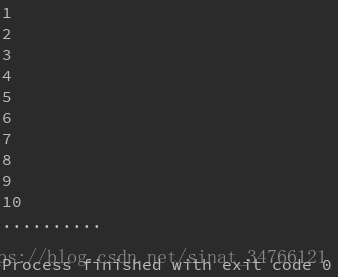
ii).while-- break (终止整体循环)
count=0
while count<10:
    count = count + 1
    print(count)
    break
    print('111111111')
print('..........')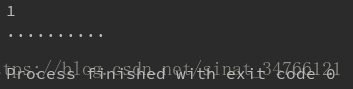
练习题:
1.使用while循环输入 1 2 3 4 5 6 8 9 10
count=1
while count<11:
	if count==7:
		print(' ')
	else:
		print(count)
	count=count+1
2.求 1-100的所有数的和
count=1
s=0
while count<101:
	s=s+count
	count=count+1
print(s)
3.输出 1-100内所有的奇数
count=1
while count<101:
	if count % 2== 0:
		pass
	else:
		print(count)
	count=count+1
4.输出1-100内所有的偶数
count=1
while count<101:
	if count % 2== 0:
		print(count)
	else:
		pass
	count=count+1
5.求1-2+3-4+5...99的所有数的和
count=1
s=0
while count<100:
	if count%2== 0:
		#print(s)
		s=s-count
	else:
		#print(s)
		s=s+count
count=count+1
print(s)
6.用户登录(三次机会重试)
count=0
while count<3:
	user_name=input('请输入用户名:')
	password=input('请输入密码:')
	if user_name=='SHINee'and password=='080525':
		print('Congradulations!')
		break
	else:
		count=count+1
		if count==3:
			print('Sorry,you can not try it anymore')
			break
		else:
			print('Sorry,please check your user_name and password')
参考文档:

CSDN联合极客时间,共同打造面向开发者的精品内容学习社区,助力成长!
更多推荐


 0
0 0
0- 0


 已为社区贡献1条内容

所有评论(0)