zookeeper(三)zookeeper的多种客户端
(一) 使用ZooKeeper原生API
命名空间:
Chroot特性允许每个客户端设置一个命名空间,如果一个Zookeeper客户端设置了Chroot,那么该客户端对服务器的任何操作,都将被限定在自己的命名空间下。
如果我们希望为应用分配/apps/X下的所有子节点,那么该应用可以将所有Zookeeper客户端的Chroot设置为/apps/X。一旦设置了Chroot后,那么对于这个客户端来说,所有的节点路径都已/apps/X为跟节点。
客户端可以在connectString中以添加后缀的方式来设置,如:
192.168.56.101:2181,192.168.56.101:2182,192.168.56.101:2183/apps/X
负载均衡策略:
StaticHostProvider是ZK默认的一种非常简单的负载均衡策略,它的表现形式其实类似“Random Robin”策略。StaticHostProvider会从客户端输入构成服务器地址,然后通过其next方法从serverAddress中获取一个服务器地址时,会先将服务器地址打散然后拼装成一个环形循环列表。
如原始地址访问字符为:“host1,host2,host3,host4,host5”经过打散重新拼装后会构成环形列表: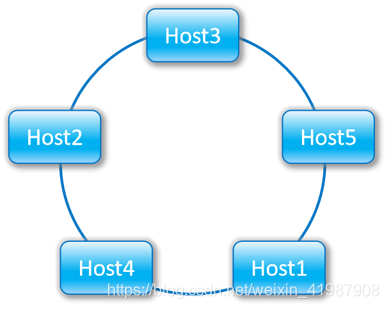
初始化的时候currentIndex和lastIndex都是-1。每次尝试获取一个服务器地址的时候,都会将currentIndex向前移动1位,如果发现游标移动超过了整个地址列表的长度,那么就重置0,回到开始的位置重新开始。对于那些服务器地址列表提供的比较少的场景,StaticHostProvider如果发现当前游标位置和上次使用过的地址一样,即当currentIndex和lastIndex相同时,就进行spinDelay毫秒时间的等待。
具体源码如下:
// 初始化时currentIndex和lastIndex都为-1
// lastIndex表示当前正在使用的服务器地址位置
private int lastIndex = -1;

// currentIndex表示环形队列中当前遍历到的那个元素位置
private int currentIndex = -1;

private void init(Collection<InetSocketAddress> serverAddresses) {
    if (serverAddresses.isEmpty()) {
        throw new IllegalArgumentException(
            "A HostProvider may not be empty!");
    }

    this.serverAddresses.addAll(serverAddresses);
    // 打散集合
    Collections.shuffle(this.serverAddresses);
}

// 获取服务器地址函数
public InetSocketAddress next(long spinDelay) {
    // currentIndex向前移动一位并与服务器数量做“%”操作
    currentIndex = ++currentIndex % serverAddresses.size();
    // 如果currentIndex和上次访问的服务器相同,则休眠spinDelay毫秒
    if (currentIndex == lastIndex && spinDelay > 0) {
        try {
            Thread.sleep(spinDelay);
        } catch (InterruptedException e) {
            LOG.warn("Unexpected exception", e);
        }
    } else if (lastIndex == -1) {
        // We don't want to sleep on the first ever connect attempt.
        lastIndex = 0;
    }

    // 根据currentIndex获取地址
    InetSocketAddress curAddr = serverAddresses.get(currentIndex);
    try {
        // 把地址解析成字符串
        String curHostString = getHostString(curAddr);
        // 根据字符解析所有网络地址
        List<InetAddress> resolvedAddresses = new ArrayList<InetAddress>(Arrays.asList(this.resolver.getAllByName(curHostString)));
        // 如果List为空,代表没有可以解析到的其他主机
        if (resolvedAddresses.isEmpty()) {
            return curAddr;
        }
        // 如果List不为空,把解析到的集合再次打散
        Collections.shuffle(resolvedAddresses);
        // 返回打散集合的第一条数据
        return new InetSocketAddress(resolvedAddresses.get(0), curAddr.getPort());
    } catch (UnknownHostException e) {
        return curAddr;
    }
}

// 获取到服务器地址后,连接服务器时调用
public void onConnected(){
    // 让lastIndex等于currentIndex,相当于lastIndex移动到currentIndex的位置来表示最后一次访问的服务器
    lastIndex = currentIndex;
}
在使用ZooKeeper的Java客户端时,经常需要处理几个问题:
-
Watcher反复注册
-
Session超时重连
-
异常处理
要解决上述的几个问题,可以自己解决,也可以采用第三方的java客户端来完成。
(二)使用ZkClient
创建会话:
public ZkClient(final String zkServers, final int sessionTimeout,
       final int connectionTimeout, final ZkSerializer zkSerializer,
       final long operationRetryTimeout)
创建节点:
同步,可以递归创建
public String create(String path,Object data,final List<ACL> acl,CreateMode mode)
public void createPersistent(String path,boolean createParents,List<ACL> acl)
public void createPersistent(String path, Object data, List<ACL> acl)
public String createPersistentSequential(String path,Object data,List<ACL> acl)
public void createEphemeral(String path, Object data, List<ACL> acl)
public String createEphemeralSequential(String path,Object data,List<ACL> acl)
删除节点:
同步,可以提供递归删除
public boolean delete(String path,int version)
public boolean deleteRecursive(String path)
获取节点:
同步,避免不存在异常
public List<String> getChildren(String path)
public <T> T readData(String path, boolean returnNullIfPathNotExists)
public <T> T readData(String path, Stat stat)
更新节点:
同步,实现CAS,状态返回
public void writeData(String path, Object datat, int expectedVersion)
public Stat writeDataReturnStat(String path,Object datat,int expectedVersion)
判断节点是否存在:
public boolean exists(String path)
事件监听:
public List<String> subscribeChildChanges(String path, IZkChildListener listener)
事件通知:
public void handleChildChange(String parentPath, List<String> currentChilds)
(三)使用Curator
Curator是Netflix公司开源的一个Zookeeper客户端,与Zookeeper提供的原生客户端相比,Curator的抽象层次更高,简化了Zookeeper客户端的开发量。
- 封装ZooKeeper client与ZooKeeper server之间的连接处理;
- 提供了一套Fluent风格的操作API;
- 提供ZooKeeper各种应用场景(recipe,比如共享锁服务,集群领导选举机制)的抽象封装。
Curator几个组成部分
-
Client:是ZooKeeper客户端的一个替代品,提供了一些底层处理和相关的工具方法。
-
Framework:用来简化ZooKeeper高级功能的使用,并增加了一些新的功能,比如管理到ZooKeeper集群的连接,重试处理。
-
Recipes:实现了通用ZooKeeper的recipe,该组件建立在Framework的基础之上
-
Utilities:各种ZooKeeper的工具类。
-
Errors:异常处理,连接,恢复等。
-
Extensions:recipe扩展
RetryPolicy 连接策略
- RetryOneTime:只重连一次.
- RetryNTime:指定重连的次数N.
- RetryUtilElapsed:指定最大重连超时时间和重连时间间隔,间歇性重连直到超时或者链接成功。
- ExponentialBackoffRetry:基于"backoff(退避)"方式重连,和RetryUtilElapsed的区别是重连的时间间隔是动态的。
- BoundedExponentialBackoffRetry:同ExponentialBackoffRetry,增加了最大重试次数的控制。
Curator的API
创建会话:
CuratorFrameworkFactory.newClient(String connectString, int sessionTimeoutMs,
				int connectionTimeoutMs, RetryPolicy retryPolicy)

CuratorFrameworkFactory.builder().connectString("192.168.11.56:2180")
		    .sessionTimeoutMs(30000).connectionTimeoutMs(30000)
		    .canBeReadOnly(false)
		    .retryPolicy(new ExponentialBackoffRetry(1000, Integer.MAX_VALUE))
		    .build();
创建节点:
client.create().creatingParentIfNeeded()
        .withMode(CreateMode.PERSISTENT)
        .withACL(aclList)
        .forPath(path, "hello, zk".getBytes());
删除节点:
client.delete().guaranteed().deletingChildrenIfNeeded().withVersion(version).forPath(path)
获取节点:
client.getData().storingStatIn(stat).forPath(path);

client.getChildren().forPath(path);
更新节点:
client.setData().withVersion(version).forPath(path, data)
判断节点是否存在:
client.checkExists().forPath(path);
设置权限:
Build.authorization(String scheme, byte[] auth)
client.setACL().withVersion(version)
        .withACL(ZooDefs.Ids.CREATOR_ALL_ACL)
        .forPath(path);
监听器:
- Cache是curator中对事件监听的包装,对事件的监听可以近似看做是本地缓存视图和远程ZK视图的对比过程
- NodeCache 节点缓存用于处理节点本身的变化,回调接口NodeCacheListener
- PathChildrenCache 子节点缓存用于处理节点的子节点变化,回调接口PathChildrenCacheListener
- TreeCache/NodeCache和PathChildrenCache的结合体,回调接口TreeCacheListener

CSDN联合极客时间,共同打造面向开发者的精品内容学习社区,助力成长!
更多推荐

 0
0 0
0- 0


 已为社区贡献1条内容

所有评论(0)