Spring学习笔记---Spring的事务管理
目录一、事务1.什么是事务2.事务的特性3.如果不考虑隔离性引发的安全性问题4.解决读问题二、Spring的事务管理的API1.PlatformTransactionManager:平台事务管理器2.TransactionDefinition :事务定义信息3.TransactionStatus:事务的状态4.事务管理的API的关系:三、Sprin...
目录
1.PlatformTransactionManager:平台事务管理器
2.TransactionDefinition :事务定义信息
五、Spring的事务管理:一类:编程式事务(需要手动编写代码)
六、Spring的事务管理:二类:声明式事务管理(通过配置实现)---AOP
一、事务
1.什么是事务
- 事务:逻辑上的一组操作,组成这组操作的各个单元,要么全部成功,要么全部失败。
2.事务的特性
- 原子性:事务不可分割
- 一致性:事务执行前后数据完整性保持一致
- 隔离性:一个事务的执行不应该受到其他事务的干扰
- 持久性:一旦事务结束,数据就持久化到数据库
3.如果不考虑隔离性引发的安全性问题
- 读问题
- 脏读 :一个事务读到另一个事务未提交的数据
- 不可重复读 :一个事务读到另一个事务已经提交的update的数据,导致一个事务中多次查询结果不一致
- 虚读、幻读 :一个事务读到另一个事务已经提交的insert的数据,导致一个事务中多次查询结果不一致。
- 写问题
- 丢失更新
4.解决读问题
- 设置事务的隔离级别
- Read uncommitted :未提交读,任何读问题解决不了。
- Read committed :已提交读,解决脏读,但是不可重复读和虚读有可能发生。
- Repeatable read :重复读,解决脏读和不可重复读,但是虚读有可能发生。
- Serializable :解决所有读问题。
二、Spring的事务管理的API
1.PlatformTransactionManager:平台事务管理器
- 平台事务管理器:接口,是Spring用于管理事务的真正的对象。
- DataSourceTransactionManager :底层使用JDBC管理事务
- HibernateTransactionManager :底层使用Hibernate管理事务
2.TransactionDefinition :事务定义信息
- 事务定义:用于定义事务的相关的信息,隔离级别、超时信息、传播行为、是否只读
3.TransactionStatus:事务的状态
- 事务状态:用于记录在事务管理过程中,事务的状态的对象。
4.事务管理的API的关系:
Spring进行事务管理的时候,首先平台事务管理器根据事务定义信息进行事务的管理,在事务管理过程中,产生各种状态,将这些状态的信息记录到事务状态的对象中。
三、Spring的事务的传播行为
1.Spring的传播行为
- Spring中提供了七种事务的传播行为:
PROPAGATION_REQUIRED :默认值,如果A中有事务,使用A中的事务,如果A没有,创建一个新的事务,将操作包含进来
- 保证多个操作在同一个事务中
PROPAGATION_SUPPORTS :支持事务,如果A中有事务,使用A中的事务。如果A没有事务,不使用事务。
PROPAGATION_MANDATORY :如果A中有事务,使用A中的事务。如果A没有事务,抛出异常。
- 保证多个操作不在同一个事务中
PROPAGATION_REQUIRES_NEW :如果A中有事务,将A的事务挂起(暂停),创建新事务,只包含自身操作。如果A中没有事务,创建一个新事务,包含自身操作。
PROPAGATION_NOT_SUPPORTED :如果A中有事务,将A的事务挂起。不使用事务管理。
PROPAGATION_NEVER :如果A中有事务,报异常。
- 嵌套式事务
PROPAGATION_NESTED :嵌套事务,如果A中有事务,按照A的事务执行,执行完成后,设置一个保存点,执行B中的操作,如果没有异常,执行通过,如果有异常,可以选择回滚到最初始位置,也可以回滚到保存点。
四、Spring的事务管理
1.搭建Spring的事务管理的环境
- 创建service的接口和实现类
package com.rosinante.tx.deno1;

public interface AccountService {
	public void transfer(String from,String to,Double money);

}
package com.rosinante.tx.deno1;
public class AccountServiceImpl implements AccountService{
//注入Dao
private AccountDao accountDao;
public AccountDao getAccountDao() {
return accountDao;
}
public void setAccountDao(AccountDao accountDao) {
this.accountDao = accountDao;
}
/**
* from:转出账号
* to:转入账号
* money:转账金额
*/
public void transfer(String from, String to, Double money) {
// TODO Auto-generated method stub
accountDao.outMoney(from, money);
accountDao.inMoney(to, money);
}
}
- 创建Dao的接口和实现类
package com.rosinante.tx.deno1;
/**
 * 转账的DAO的接口
 * @author Administrator
 *
 */
public interface AccountDao {
	public void outMoney(String from,Double money);
	public void inMoney(String to,Double money);
}
package com.rosinante.tx.deno1;
import org.springframework.jdbc.core.support.JdbcDaoSupport;
public class AccountDaoImpl extends JdbcDaoSupport implements AccountDao {
public void outMoney(String from, Double money) {
// TODO Auto-generated method stub
this.getJdbcTemplate().update("update account set money = money - ? where name = ?",money,from);
}
public void inMoney(String to, Double money) {
// TODO Auto-generated method stub
this.getJdbcTemplate().update("update account set money = money + ? where name = ?",money,to);
}
}
- 配置Service和Dao:交给spring管理
这里创建一个新的配置文件tx.xml
<!-- 配置Service -->
<bean id="accountService" class="com.rosinante.tx.demo1.AccountServiceImpl">
	<property name="accountDao" ref="accountDao"></property>
</bean>

<!-- 配置Dao -->
<bean id="accountDao" class="com.rosinante.tx.demo1.AccountDaoImpl">
	<property name="dataSource" ref="dataSource"></property>
</bean>- 在Dao中编写扣钱和加钱方法:
配置连接池和JDBC模板:
<!-- 配置连接池和JDBC模板 -->
<context:property-placeholder location="classpath:jdbc.properties"/>

<bean id="dataSource" class="com.mchange.v2.c3p0.ComboPooledDataSource">
	<property name="driverClass" value="${jdbc.driverClass}"/>
	<property name="jdbcUrl" value="${jdbc.url}"/>
	<property name="user" value="${jdbc.username}"/>
	<property name="password" value="${jdbc.password}"/>
</bean>
在Dao中注入JDBC的模板:
<!-- 配置Dao -->
<bean id="accountDao" class="com.rosinante.tx.demo1.AccountDaoImpl">
	<property name="dataSource" ref="dataSource"></property>
</bean>- 测试
package com.rosinante.tx.demo1;

import javax.annotation.Resource;

import org.junit.Test;
import org.junit.runner.RunWith;
import org.springframework.test.context.ContextConfiguration;
import org.springframework.test.context.junit4.SpringJUnit4ClassRunner;

/**
 * 测试转账的环境
 * @author Administrator
 *
 */
@RunWith(SpringJUnit4ClassRunner.class)
@ContextConfiguration("classpath:tx.xml")
public class SpringDemo1 {

	@Resource(name="accountService")
	private AccountService accountService;

	@Test
	public void demo1(){
		accountService.transfer("wangwu", "zhangsan", 1000d);
	}
}
运行结果:
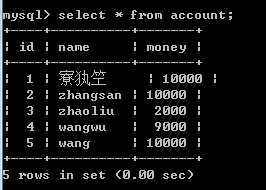
但是,如果转账过程中出现异常,比如我们在AccountServiceImpl类transfer方法中添加一个异常:
public void transfer(String from, String to, Double money) {
	// TODO Auto-generated method stub
	accountDao.outMoney(from, money);
	int d = 1/0;
	accountDao.inMoney(to, money);
}
再次运行:
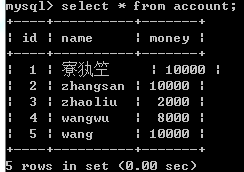
会发现wangwu转出了1000,但zhangsan并未收到1000。
注:数据库建表请戳上一篇笔记:Spring学习笔记---Spring的JDBC模板的使用
五、Spring的事务管理:一类:编程式事务(需要手动编写代码)
1.第一步:配置平台事务管理器
<!-- 配置平台事务管理器 -->
<bean id="transactionManager" class="org.springframework.jdbc.datasource.DataSourceTransactionManager">
	<property name="dataSource" ref="dataSource"></property>
</bean>
2.第二步:Spring提供了事务管理的模板类
- 配置事务管理的模板类
<!-- 配置事务管理的模板 -->
<bean id="transactionTemplate" class="org.springframework.transaction.support.TransactionTemplate">
	<property name="transactionManager" ref="transactionManager"></property>
</bean>
3.第三步:在业务层上注入事务管理的模板
<!-- 配置Service -->
<bean id="accountService" class="com.rosinante.tx.demo1.AccountServiceImpl">
	<property name="accountDao" ref="accountDao"></property>
	<!-- 注入事务管理模板 -->
	<property name="transactionTemplate" ref="transactionTemplate"></property>
</bean>
4.编写事务管理的代码
public void transfer(final String from, final String to, final Double money) {
	// TODO Auto-generated method stub
	transactionTemplate.execute(new TransactionCallbackWithoutResult() {

		@Override
		protected void doInTransactionWithoutResult(TransactionStatus transactionStatus) {
			// TODO Auto-generated method stub
			accountDao.outMoney(from, money);
			int d = 1/0;
			accountDao.inMoney(to, money);
		}
	});
}
5.测试
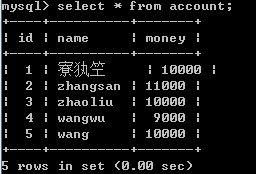
为了方便测试,将表中所有人的money全部改为10000。
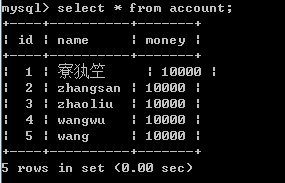
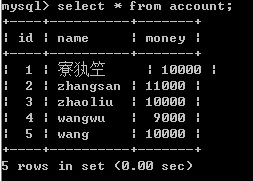
将异常语句 int d=1/0;注释掉,执行测试方法demo1():
显示转账成功:
将产生异常的语句 int d=1/0;取消注释,执行测试方法:
转账失败:
六、Spring的事务管理:二类:声明式事务管理(通过配置实现)---AOP
1.XML方式的声明式事务管理
- 第一步:引入aop的开发包
- 第二步:恢复转账环境
- 第三步:配置事务管理器
<!-- 配置事务管理器 -->
<bean id="transactionManager" class="org.springframework.jdbc.datasource.DataSourceTransactionManager">
	<property name="dataSource" ref="dataSource"></property>
</bean>- 第四步:配置增强
<!-- 配置事务增强 -->
<tx:advice transaction-manager="transactionManager">
	<tx:attributes>
		<!-- 事务管理的规则 -->
		<tx:method name="transfer" propagation="REQUIRED"/>
	</tx:attributes>
</tx:advice>- 第五步:AOP的配置
<!-- AOP的配置 -->
<aop:config>
	<aop:pointcut expression="execution(* com.rosinante.tx.demo2.AccountServiceImpl.*(..))" id="pointcut1"/>
	<aop:advisor advice-ref="txAdvice" pointcut-ref="pointcut1"/>
</aop:config>
2.注解方式的声明式事务管理
- 第一步:引入aop的开发包
- 第二步:恢复转账环境
- 第三步:配置事务管理器
<!-- 配置事务管理器 -->
<bean id="transactionManager" class="org.springframework.jdbc.datasource.DataSourceTransactionManager">
	<property name="dataSource" ref="dataSource"></property>
</bean>- 第四步:开启注解事务
<!-- 开启注解事务 -->
<tx:annotation-driven transaction-manager="transactionManager"/>
- 第五步:在业务层上添加注解
package com.rosinante.tx.demo3;

import org.springframework.transaction.annotation.Transactional;

@Transactional
public class AccountServiceImpl implements AccountService{

    ......

}

CSDN联合极客时间,共同打造面向开发者的精品内容学习社区,助力成长!
更多推荐


 0
0 0
0- 0


 已为社区贡献1条内容

所有评论(0)